 |
Although a seemingly diverse array of SATA 6Gb/s SSDs have launched in recent months, virtually all of them are powered by the Marvell 88SS9174 or SandForce SF-2200 controllers. The former made its debut with the Crucial RealSSD C300 and has survived longer than anticipated, surfacing again in Crucial's m4 series. Intel also adopted it for its latest-generation products. Between those two drives, we favor the m4, but it's far from today's top contender.
SandForce's second-generation controller got off to a rocky start. OCZ's Vertex 3 stormed out of the gates in April, seizing control of our performance graphs. Despite an impressive showing, early adopters reported many glaring bugs with SF-2200-based drives. Those claims sent OCZ and other manufactures scrambling to release a series of firmware updates.
Fortunately, most of the major kinks seem to have been ironed out now and that's given even more vendors, such asPatriot and Kingston, the confidence to launch SandForce-flavored SSDs. Despite an increasingly saturated market, OCZ has maintained a stiff grip on the competition as it still offers the best performance versus price ratio of any SF-2200 SSD.
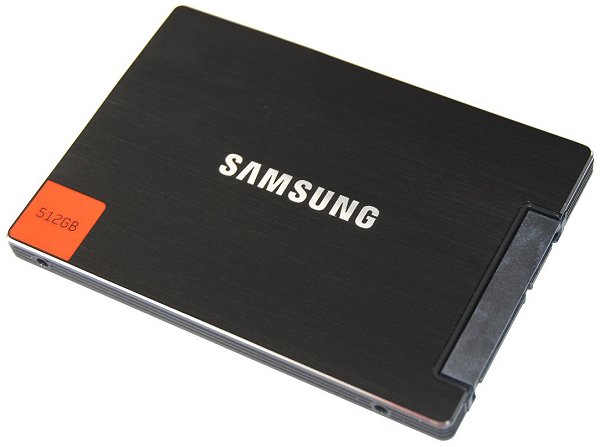
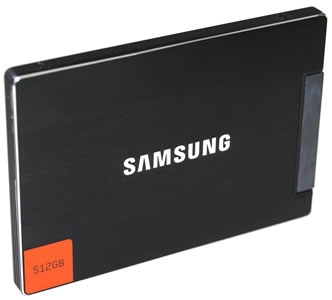
Through that whole fiasco, a third competitor has been quietly lurking in the shadows: Samsung. Following the success of its 470 Series, the company announced its new 830 Series flash drives earlier this year. At the time, little was mentioned about the drive except that it would utilize the company's in-house hardware and software, much like the 470 Series.
As a maker of memory and logic controllers, Samsung has been present in the SSD (OEM) market for years, but it wasn't until the 470 Series that the company earned a seat in the limelight. With little hype, the 470 Series quietly slipped under the radar, only to snipe the Crucial RealSSD C300 and Vertex 2 in many of our tests last year. The drive was impressive enough to deserve our "Outstanding" award and so far it's proven itself in the reliability department.
Unsurprisingly, Samsung's latest offering embraces the SATA 6Gb/s interface, touting 520MB/s reads and 400MB/s writes. The 830 Series carries a Samsung-crafted controller and memory, and it will be sold exclusively under the Samsung brand name. Considering the company's delayed entry, we hope it's had plenty of time to assess and annihilate the competition. Will we see a repeat of last year's impressive demonstration? There's only one way to find out…
Samsung 830 Series in Detail
Samsung will offer four versions of the 830 Series that range in capacity and include 64GB, 128GB, 256GB and 512GB models. All four feature the same 520MB/s read performance, but writing speed goes down as you shrink the drive's capacity. The larger 512GB and 256GB versions claim write throughput of 400MB/s, the 128GB version is slower at 320MB/s, and the 64GB model spec indicates just 160MB/s, making it half as fast as the 128GB version.


The new 830 Series SSDs receive a new Samsung S4LJ204X01-Y040 controller. This purportedly 3-core ARM-based controller supports the SATA 6Gb/s interface and can also be paired with the latest 20nm NAND flash memory.
The 470 Series featured a pair of 128MB Samsung DDR2-667 cache chips for total cache capacity of 256MB. The 830 Series is also equipped with a 256MB cache but using a single chip, Samsung has used their own DDR2-800 (K4T2G314QF-MCF7) memory.
Our 512GB review unit carried Samsung NAND flash memory labeled K9UHGY8U7A-HCK0. This memory is fabricated using 20nm tech, in total there are 8 chips with each IC having a massive 64GB density. The drive uses a thin 7mm chassis that will fit most modern ultraportables that require it.
Samsung claims a MTBF of 1.5 million hours and 1500G shock resistance. This is a typical estimate that most manufacturers label their SSDs with.
Like all SSDs the 830 Series is meant to be very power conservative. At idle all four models use 0.078 watts and a mere 0.127 watts when active according to spec. The active power rating is amazing as compared to most other SSDs that use between 2 and 4 watts of power. however early tests performed by Anandtech seem to contradict Samsung's claims. The Samsung 830 Series drives measure 100 x 69.85 x 7mm and weigh 62.5 grams. The drives are backed by a limited 3-year warranty.
How We Test, System Specs
The Intel SSD 510 Series 120GB, Crucial m4, OCZ Vertex 3, Crucial RealSSD C300 and others feature SATA 6Gb/s connectivity, requiring us to test using the Sandy Bridge (LGA1155) platform. All other 3Gb/s drives were tested on our older LGA1366 platform, but this shouldn't affect the results. A few select SATA 3Gb/s drives were tested on our LGA1155 system to check for accuracy, both synthetic and real-world performance were much the same.


In addition to our featured flash devices, the Samsung Spinpoint F1 1TB 3.5" 7200RPM hard drive has been included for comparison's sake. Our testing suite consists of four synthetic benchmark programs and our own file copying and load time tests.
As you likely know, while manufacturers claim impressive peak I/O performance out of the box, this performance can diminish over time. Unlike a conventional hard drive, any write operation made to an SSD is a two-step process: a data block must be erased and then written to. Obviously if the drive is new and unused there will be nothing to erase and therefore the first step can be bypassed, but this only happens once unless the drive is trimmed.
Considering this, we'll test how much performance you can expect to lose over time. We'll examine all drives in their clean, unused state, and then run the HD Tach full benchmark several times to fill the entire drive. This simulates heavy usage and clearly indicates of how performance will be affected after normal long-term use. All the drives in this roundup support the Windows 7 TRIM function, which is meant to counteract these negative effects.
Test System Specs
- Intel Core i7-2600K (LGA1155)
- x2 4GB DDR3-1600 G.Skill (CAS 8-8-8-20)
- Asus P8P67 Deluxe (Intel P67)
- OCZ ZX Series (1250w)
- Samsung Spinpoint F1 1TB
- Kingston SSDNow V+ 100 256GB
- Patriot Torqx 2 128GB Patriot Pyro 120GB (6Gb/s)
- Crucial RealSSD C300 256GB (6Gb/s)
- Samsung 470 Series 256GB
- Intel SSD 320 Series 300GB
- Intel SSD 510 Series 120GB (6Gb/s)
- Crucial m4 256GB (6Gb/s)
- Kingston HyperX 240GB (6Gb/s)
- Samsung 830 Series 512GB (6Gb/s)
- OCZ Vertex 3 240GB (6Gb/s)
- OCZ Vertex 3 Max IOPS 240GB (6Gb/s)
- Asus GeForce GTX 580 (1536MB)
Software
- Microsoft Windows 7 Ultimate SP1 (64-bit)
- Nvidia Forceware 280.26
- Intel Core i7-2600K (LGA1155)
- x2 4GB DDR3-1600 G.Skill (CAS 8-8-8-20)
- Asus P8P67 Deluxe (Intel P67)
- OCZ ZX Series (1250w)
- Samsung Spinpoint F1 1TB
- Kingston SSDNow V+ 100 256GB
- Patriot Torqx 2 128GB Patriot Pyro 120GB (6Gb/s)
- Crucial RealSSD C300 256GB (6Gb/s)
- Samsung 470 Series 256GB
- Intel SSD 320 Series 300GB
- Intel SSD 510 Series 120GB (6Gb/s)
- Crucial m4 256GB (6Gb/s)
- Kingston HyperX 240GB (6Gb/s)
- Samsung 830 Series 512GB (6Gb/s)
- OCZ Vertex 3 240GB (6Gb/s)
- OCZ Vertex 3 Max IOPS 240GB (6Gb/s)
- Asus GeForce GTX 580 (1536MB)
Software
- Microsoft Windows 7 Ultimate SP1 (64-bit)
- Nvidia Forceware 280.26
Benchmarks: File Copy Test
First up we have the single 6GB file copy test which uses a large compressed file. The Samsung 830 Series 512GB amazed with an average throughput of 210.3MB/s making it 31% faster than the OCZ Vertex 3 Max IOPS 240GB. The drive was also 44% faster than the Crucial m4 256GB.
The program copy test is comprised of many small non-compressed files (6104 files totaling 2.75GB). It appears that smaller files pose more of a problem for the Samsung 830 Series as the transfer rate dropped to 184.3MB/s. The drive was 6% slower than the OCZ Vertex 3 Max IOPS 240GB while it dominated the Crucial m4 256GB by a 32% margin.
The game copy evaluation which uses a mixture of small and large compressed and uncompressed files boosted the Samsung 830 Series 512GB figures. With a throughput of 226.4MB/s, it was 14% faster than the OCZ Vertex 3 Max IOPS 240GB and 21% faster than the Crucial m4 256GB.

No comments:
Post a Comment